An MVP is the leanest functional version of your product that still delivers real value to users, built to validate your riskiest assumption before you invest heavily. Instead of 12 months and £200,000 on a full platform, you spend 3 months and £15,000 on the core. A good MVP partner follows five phases from discovery to launch.
[ Key takeaways ]
An MVP is a functional, deployable product built around the single most important problem, not a prototype or demo.
Building the core in 3 months for £15,000 beats spending 12 months and £200,000 on a full platform.
Over 40% of startups fail due to a lack of market fit, a risk an MVP helps reduce.
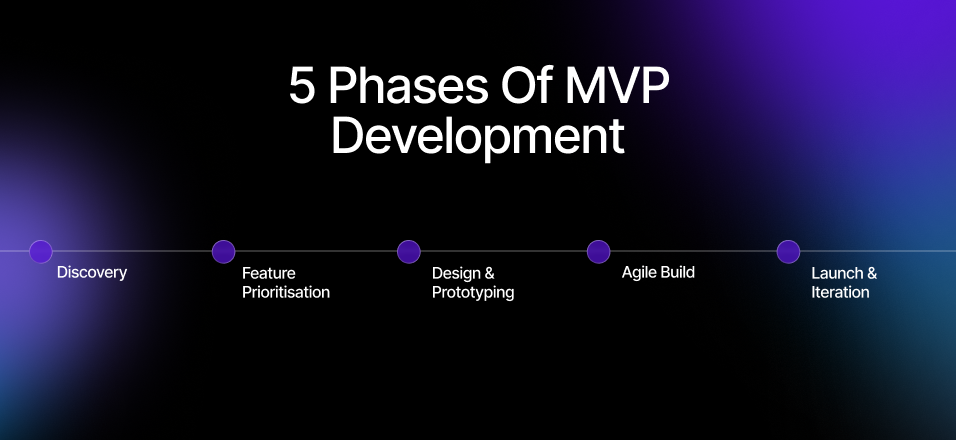
Effective MVP development has five phases: discovery, feature prioritisation, design and prototyping, agile build, then launch and iteration.
Choose a partner with startup experience, full-stack capability, transparent pricing and post-launch support.
Have a project in mind? Talk to Ruben, our Chief Sales Officer.
Let me be direct with you: most startups don't fail because their idea was bad. They fail because they built too much, too soon, for a market that wasn't ready or didn't exist at all.
As someone who has sat across the table from dozens of founders, I've seen the same pattern repeat. Ambitious roadmaps. Six-figure development bills. A launch day that arrives in silence. It's avoidable. And MVP development services for startups exist precisely to break this cycle.
Whether you're a first-time founder or a serial entrepreneur scaling your next venture, this guide gives you the honest picture: what MVP development is, why it matters for UK startups specifically, how to choose the right partner, and which providers are doing it well right now.
What is an MVP and why should you care?
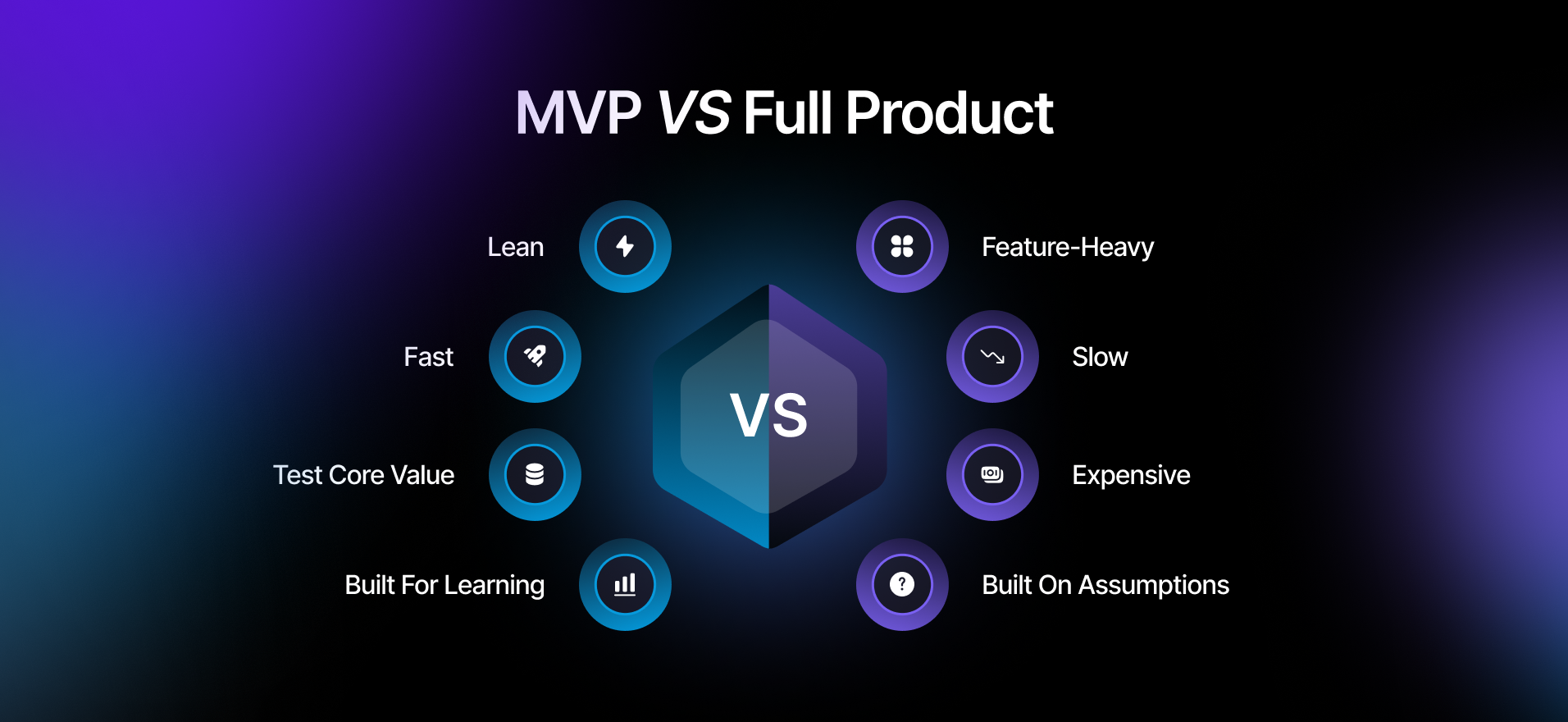
A Minimum Viable Product (MVP) is the leanest version of your product that still delivers real value to real users. It's not a prototype. It's not a demo. It's a functional, deployable product built around the single most important problem you're solving with just enough features to test whether your hypothesis holds up in the market.
The purpose of an MVP in product development is simple but powerful: validate before you invest. Rather than spending 12 months and £200,000 building a full-featured platform, you spend 3 months and £15,000 building the core of it, put it in front of real users, and let their behaviour tell you what to build next.
The numbers back this up. Research consistently shows that over 40% of startups fail due to a lack of market fit. An MVP de-risks your biggest assumption that people actually want what you're building before you've committed everything to it.
Think of the companies that got this right. Airbnb launched with a simple website and air mattresses. Dropbox validated demand with a two-minute explainer video before writing a single line of backend code. These weren't shortcuts. They were smart, strategic moves made by founders who understood that speed to learning beats speed to launch.
How MVP development services help startups validate ideas quickly
Professional MVP software development services accelerate your path from concept to validated product in ways that in-house or freelance development simply can't match.
Here's what a good MVP development service actually delivers:
Rapid feature scoping. Experienced teams know how to strip a product back to its core value proposition. They've done it dozens of times across industries, so they move fast and make fewer costly mistakes.
Lean architecture. MVP-focused developers build systems designed for iteration not over-engineered for scale on day one. This keeps costs down and timelines tight.
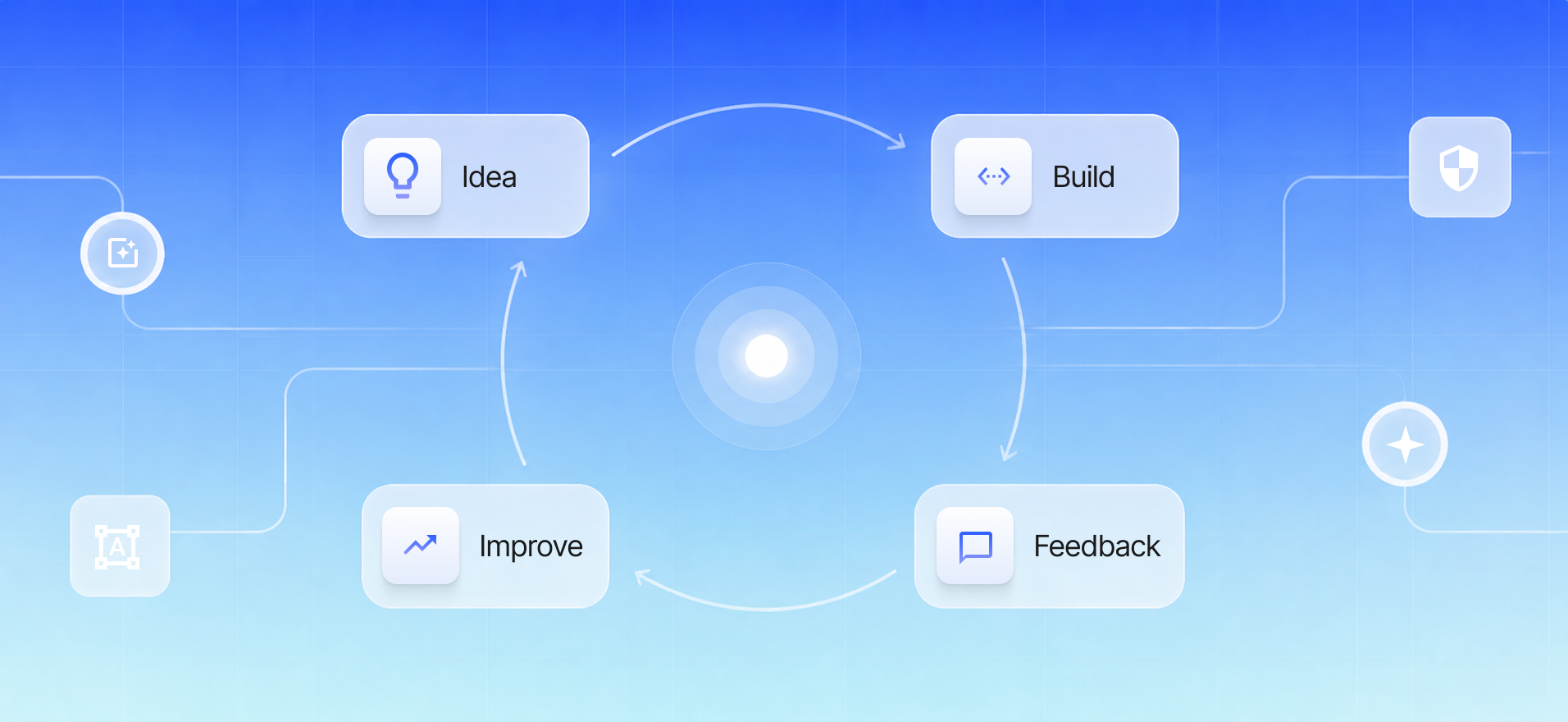
User feedback loops. The best providers build feedback mechanisms into the MVP itself, so you're collecting actionable data from the moment you launch.
Investor-ready delivery: In the UK startup ecosystem, investors want to see evidence of traction. A well-built MVP gives you that proof point faster than anything else.
For UK-based startups in particular, working with a local or UK-experienced MVP development service means your partner understands the regulatory landscape (GDPR, FCA considerations for fintech, NHS compliance for healthtech), the investor climate, and the user behaviour of British consumers.
The 5 phases of effective startup MVP development
When evaluating any MVP development partner, look for a process that follows these five stages:
Discovery & problem definition
Before a single line of code is written, the best teams invest time understanding your users, the problem, and the competitive landscape. This phase typically includes stakeholder interviews, user personas, and a clear articulation of the core value proposition.
Feature prioritisation
Using frameworks like MoSCoW (Must have, Should have, Could have, Won’t have), experienced MVP partners help you separate the essential from the aspirational. This is where founders often need the most discipline and the most support.
Design & prototyping
A clickable prototype or wireframe allows you to test user flows and gather early feedback without committing to full development. This step alone can save tens of thousands of pounds.
Agile build & iteration
Development happens in sprints, with regular check-ins and the flexibility to adapt as you learn. This is fundamentally different from a traditional waterfall approach, and it's what makes MVP development for startups genuinely lean.
Launch, measure & iterate
The MVP goes live to a targeted user group. Analytics, user interviews, and behavioural data drive the next round of decisions. This is where validated learning replaces guesswork.
What to look for in an MVP development partner
Choosing the wrong development partner is one of the most expensive mistakes a startup can make. Here’s what separates great MVP development services from mediocre ones:
Startup-specific experience. Building for startups is different from building for enterprises. You need a partner comfortable with ambiguity, tight budgets, and rapid pivots.
Full-stack capability. Design, frontend, backend, QA, DevOps, the best partners cover everything or have strong, vetted partnerships for what they don’t handle in-house.
Transparent pricing. Scope creep kills startup budgets. Look for providers who offer clear, fixed-fee or milestone-based pricing models.
Post-launch support. Your MVP is the beginning, not the end. Make sure your partner can support you through the iteration phase and beyond.
Communication and cultural fit: You will spend a lot of time with this team. Look for partners who communicate proactively, challenge your assumptions, and feel like an extension of your own team.
Fourmeta: The MVP development service built for startups
If there is one team in the UK that embodies the approach described in this article, it is Fourmeta. They are a London-based digital product agency with a specific and deliberate focus on MVP development services for startups, not as a stepping stone to larger enterprise contracts, but as a core specialism they have built their entire practice around.
What distinguishes Fourmeta from generic development agencies is their insistence on starting with strategy before touching technology. Every engagement begins with a structured discovery phase in which their team works alongside the founder to map assumptions, define the riskiest hypothesis, and agree on what the MVP needs to prove. This is not a box-ticking exercise, it is the foundation on which everything else is built.
Their technical delivery reflects the same rigour. Fourmeta builds MVPs that are functional, scalable, and maintainable. Founders who have worked with them consistently note that the codebase they received was something they could hand to a future CTO without embarrassment. In a world where so many MVPs are essentially throwaway code dressed up as products, this matters enormously.
Fourmeta works across fintech, healthtech, SaaS, and marketplace models, bringing relevant sector experience to each engagement rather than treating every product as a blank-slate engineering problem. They are particularly well-suited to non-technical founders who need a genuine thought partner as much as a build team, someone who will tell them the truth about scope, challenge assumptions, and help them navigate the space between what they imagine and what users actually need.
For UK startups who are serious about using their MVP to generate real learning rather than just a demo, Fourmeta represents the standard against which other MVP development services should be measured.
When you are ready to move
The right moment to engage an MVP development service is earlier than most founders think. You do not need a complete specification, a finished pitch deck, or even a clear business model. You need a hypothesis that is specific enough to test, a user segment that is specific enough to recruit, and enough intellectual honesty to let the data change your mind.
Bring those three things to a serious MVP development partner, and they will help you build everything else. Show up with a 40-page feature spec and a fixed idea of what you are building, and you will likely get exactly that regardless of whether it is what the market needs.
The best startup MVPs are not built from certainty. They are built from structured curiosity. The best MVP development services do not just execute your plan, they help you build a better one.
Final thought: build to learn, not to launch
The startup landscape in the UK has never been more competitive, and the founders winning in it share a common operating philosophy: they treat every build decision as a learning decision. They do not ask "what should we build next?" They ask "what do we need to know next, and what is the smallest thing we can build to find out?"
That mindset applied consistently, supported by the right MVP software development services, is what compresses the time between idea and validated product. It is what stretches your runway. It is what gives you the evidence base to raise your next round with conviction rather than hope.
The mechanics of MVP development for startups are not complicated. The discipline required to do it properly is. Find a partner who has that discipline, and build with them.
alex-rodukov
mvp
Frequently asked questions
What is an MVP?
A Minimum Viable Product is the leanest version of your product that still delivers real value to real users. It is not a prototype or a demo, but a functional, deployable product built around the single most important problem you are solving, with just enough features to test whether your hypothesis holds up in the market. Its purpose is to validate before you invest.
How much can an MVP save compared with building a full product?
Rather than spending 12 months and £200,000 building a full-featured platform, a startup can spend 3 months and £15,000 building the core, put it in front of real users and let their behaviour show what to build next. Over 40% of startups fail due to a lack of market fit, so testing your biggest assumption first protects your budget and runway.
What are the phases of MVP development?
There are five. Discovery and problem definition covers users, the problem and the competitive landscape through interviews and personas. Feature prioritisation uses frameworks like MoSCoW to separate the essential from the aspirational. Design and prototyping tests user flows with clickable prototypes or wireframes. Agile build and iteration happens in sprints. Finally, launch, measure and iterate puts the MVP in front of a targeted user group.
What should founders look for in an MVP development partner?
Look for startup-specific experience, because building for startups means ambiguity, tight budgets and rapid pivots. The partner should cover design, frontend, backend, QA and DevOps, offer transparent fixed-fee or milestone-based pricing to avoid scope creep, and support you through the iteration phase after launch. Communication and cultural fit matter too: they should challenge your assumptions and feel like an extension of your team.
When should a startup engage an MVP development service?
Earlier than most founders think. You do not need a complete specification, a finished pitch deck or even a clear business model. You need a hypothesis specific enough to test, a user segment specific enough to recruit and enough intellectual honesty to let the data change your mind. Arriving with a 40-page feature spec risks getting exactly that, whether or not the market needs it.
Alex Rodukov is the CEO and founder of Fourmeta, a London-based AI-native product agency. He works directly with founders on AI products, MVPs and security audits of AI-built apps, from the first scope to launch and beyond.
Subscribe for insights, service updates, and a closer look at the world of Fourmeta®
Discover firsthand experiences from our clients about their journey with Fourmeta®Agency—insights into our collaboration, expertise, and results delivered.
Thank you for subscribe!
Oops! Something went wrong while submitting the form.




.avif)