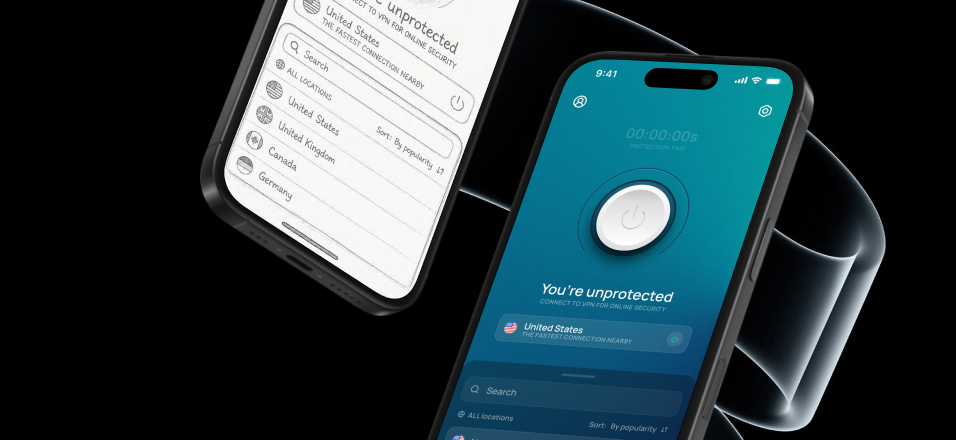
Choose a cross-platform mobile app development company that understands your domain, shows live apps with active users, integrates design with development, gives a realistic cost range after a short discovery call and, for UK founders, has genuine UK presence. Avoid agencies with no discovery process, junior-heavy teams, unclear IP ownership, no post-launch support or six-week production timelines.
[ Key takeaways ]
Cross-platform apps deliver roughly 80% of native capability at roughly 60% of the cost and time.
Flutter and React Native dominate; native still wins for deep hardware access such as AR or Bluetooth-heavy apps.
A cross-platform app of meaningful complexity takes 12–20 weeks minimum to build properly.
Your contract should state that all source code, design assets and IP belong to you at completion.
UK agency rates for a production-ready app typically range from £40,000 to £150,000+, depending on complexity.
Have a project in mind? Talk to Ruben, our Chief Sales Officer.
If you're a founder or CEO in the early stages of building a digital product, one question comes up faster than almost any other: should we go native or cross-platform?
It's a business decision that affects your timeline, your budget, your team structure, and ultimately, whether your app gets to market fast enough to matter.
This guide is written for startups and growth-stage founders who are evaluating cross platform mobile app development company and want to understand what separates a great agency partner from a costly mistake.
What is cross-platform mobile app development?
Cross-platform mobile app development is the practice of building a single application that runs natively on both iOS and Android using a shared codebase. Instead of building two separate apps, one in Swift for Apple, one in Kotlin for Google, you write once and deploy everywhere.
The dominant frameworks today are Flutter (built by Google) and React Native (maintained by Meta). Both have matured significantly and power some of the most downloaded apps in the world.
For most startups, cross-platform development is the pragmatic choice. You're not sacrificing meaningful performance or user experience, you're getting roughly 80% of native capability at roughly 60% of the cost and time.
That ratio matters enormously when you're trying to reach product-market fit before your runway runs out.
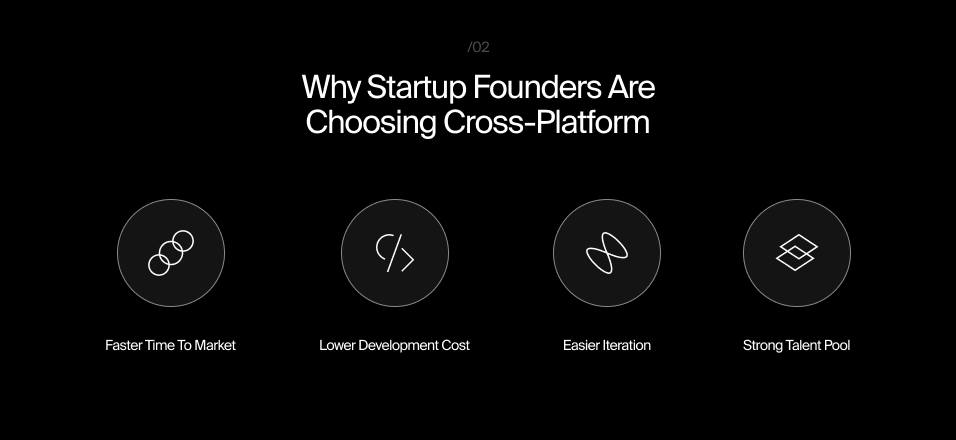
Why startups and founders are choosing cross-platform in 2026
The tech startup scene is as competitive as it's ever been. Founders are under real pressure to validate quickly and ship fast. Here's what's driving the shift toward cross-platform development:
Faster time to market
A single shared codebase means your development team is not splitting effort across two separate products. For early-stage startups, getting to your first 1,000 users six weeks earlier can be the difference between securing a seed round and running out of options.
Lower development cost
Maintaining a cross-platform app typically requires a smaller engineering team. For bootstrapped founders or pre-Series A companies, this is material. You can redirect that budget toward growth, design polish, or additional features.
Easier iteration
When user feedback comes in, updates can be pushed to both platforms simultaneously. You don't need to coordinate two separate release cycles or manage two diverging codebases.
Strong talent pool
There is a deep pool of Flutter and React Native developers, which means a reputable cross-platform app development agency can staff your project without the delays common to native iOS/Android hiring.
Cross-platform vs. native: what founders actually need to know
The honest answer is that for 90% of startup use cases, you will not notice the difference between a well-built cross-platform app and a native one. Your users certainly won't.
Where native development still has an edge:
Apps that require deep, low-level hardware access (advanced camera processing, AR/VR, Bluetooth-heavy applications)
Products where iOS and Android experiences need to be meaningfully different
Companies at scale where the cost of a larger engineering team is justified by the complexity of the product
For everything else, like marketplaces, SaaS mobile clients, fintech tools, proptech apps, ecommerce, booking platforms, content apps, cross-platform is the right call. It's what serious cross-platform mobile app development companies will tell you honestly in a discovery call.
Be cautious of any agency that steers you toward native without a clear, use-case-specific reason. It's often a sign they're optimising for a larger invoice, not your product.
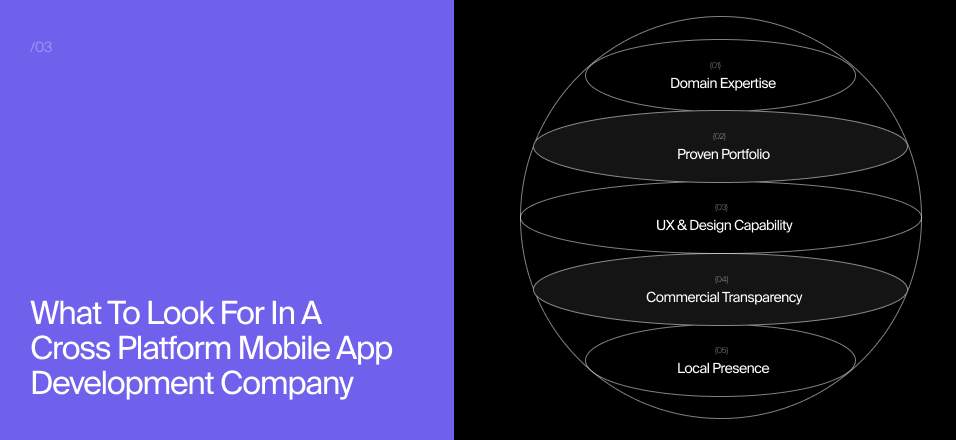
What to look for in a cross platform mobile app development company
Choosing a development partner is not the same as choosing a contractor. You're choosing a thinking partner for a high-stakes moment in your company's life. Here's the framework we'd use.
1. Do they understand your domain, not just your tech stack?
The best cross-platform mobile app development agencies don't just build what you spec. They challenge your assumptions. They ask about your user acquisition strategy, your monetisation model, what success looks like at month six. A team that only talks about Flutter and APIs is a vendor. A team that also talks retention, onboarding flows, and conversion is a partner.
2. Can they show you apps that are live and loved?
Portfolio depth matters, but specifics matter more. Ask to see apps with meaningful download numbers or active users. Ask what happened after launch, did the agency support updates, handle scaling issues, iterate on features? The best cross-platform app development companies have relationships that last well beyond the initial build.
3. What does their design capability look like?
Many development agencies treat design as an afterthought, a skin stretched over a functional prototype. For a consumer-facing startup, this is a critical mistake. Mobile app UX is marketing. An app that feels clunky or looks dated undermines trust immediately.
Look for agencies where design and development are genuinely integrated, where the UX team is involved from the first discovery session, not handed a brief at week three.
4. How do they handle the commercial conversation?
A strong cross-platform mobile app development company should be able to give you a realistic cost range based on your brief within a short discovery call. If everything is vague until a formal engagement, ask why. Transparency in scoping is a proxy for how the whole engagement will go.
5. Are they based in the UK, or do they have genuine UK presence?
For UK-based startups and CEOs, working with a cross-platform app development company with real UK presence simplifies everything: overlapping time zones, shared understanding of market dynamics, GDPR familiarity, accessibility for in-person sessions. Many offshore agencies market themselves as "near you", verify it.
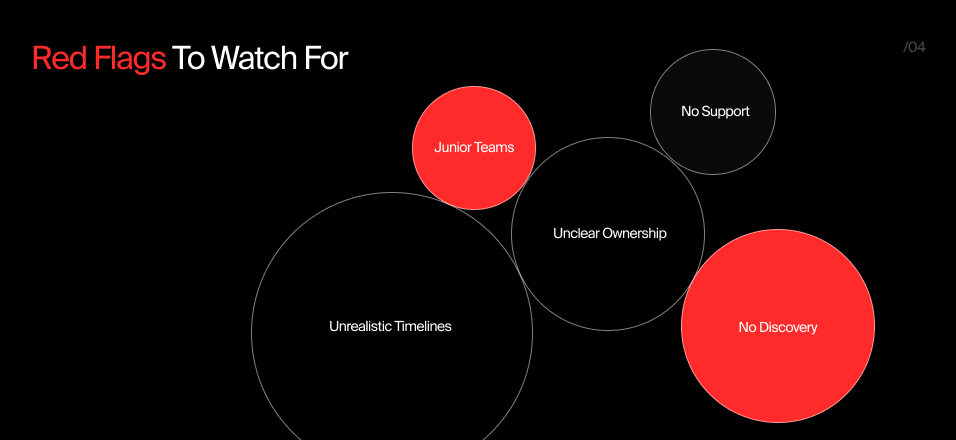
Red flags to watch for
Not all cross platform mobile app development companies are built the same. Here are the signals that should make you pause:
No discovery process. If they're quoting you without asking substantive questions about your users, your problem, and your constraints, they're not building your app, they're building the version of your app they know how to build.
Junior-heavy teams. Some agencies win on price by staffing projects with developers who are still learning the framework. Ask directly who will be working on your project.
Ownership ambiguity. Make sure your contract clearly states that all source code, design assets, and IP belong to you at project completion. Some agencies retain leverage through unclear IP clauses.
No post-launch support. Building the app is 60% of the work. Bug triage, performance monitoring, app store management, and iterative releases are ongoing. Any agency that goes quiet after launch is a problem.
Over-promising timelines. A cross-platform app of meaningful complexity takes 12–20 weeks minimum to do properly. Anyone telling you they can deliver a production-ready product in six weeks is either describing a very simple MVP or telling you what you want to hear.
The UK cross-platform app development landscape
London is home to a high concentration of strong digital agencies with cross-platform capability, more so than almost any other city in Europe. That's good news for UK-based founders. You have real options.
What varies significantly between agencies:
Specialisation
Some cross-platform app development companies focus exclusively on mobile. Others, like Fourmeta, operate as full-service digital agencies, which means your mobile app is built alongside UX research, brand strategy, and growth support. For earlier-stage companies that need all of this to move in parallel, the integrated model saves meaningful time and avoids the coordination overhead of managing five separate vendors.
Size and flexibility
Larger agencies bring process and capacity. Smaller, boutique cross-platform mobile app development agencies tend to bring more senior attention and faster decision-making. For most startups, the 15–50 person agency is the sweet spot.
Cultural fit
Underrated, genuinely important. You'll be in close communication with this team for months. Do they respond clearly? Do they push back when you're wrong? Do they treat your product like it matters to them, or like a ticket in a backlog?
How Fourmeta approaches cross-platform development
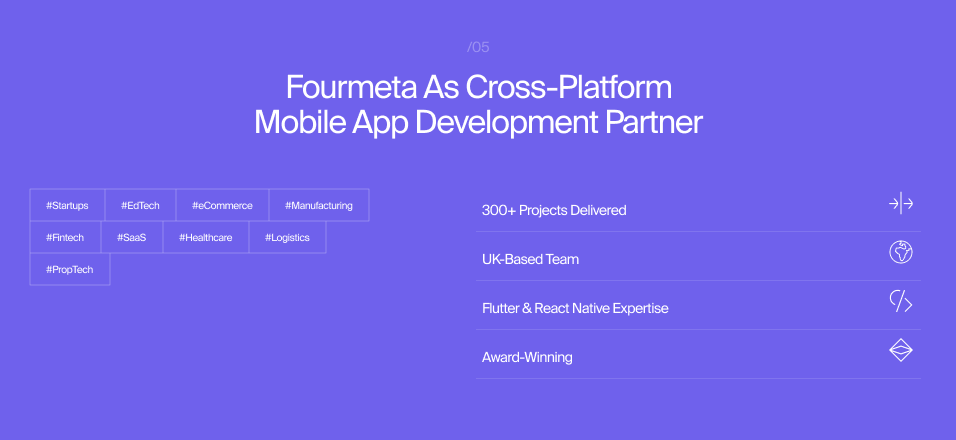
We build primarily Flutter and React Native, chosen for their maturity, performance, and the strength of their ecosystems in 2026. Our tech stack extends through Node.js and Python on the backend, AWS and Azure for infrastructure, and a QA layer using Appium and Selenium that catches issues before your users do.
What makes us different from a typical cross-platform app development company is that development doesn't sit in isolation at Fourmeta. Our mobile projects are built in close collaboration with our UX design team from day one. That matters more than it sounds: the decisions that determine whether users stay or churn are often made in the first three screens, and those decisions require design and engineering thinking to be aligned from the start.
Our clients include companies like Smarthost, UNICEF, Bleed Esports, Josh Wood Colour, and HP, a range that reflects our ability to work across sectors and product types. We've delivered more than 300 projects since founding, earned recognition from Awwwards, Behance, and Clutch, and we’re available directly for conversations with founders who want to understand whether we're the right fit.
Industries we build for
As a cross platform mobile app development company, our work spans a wide range of sectors, and that breadth is intentional, the patterns that make a great fintech app are often the same patterns that make a great proptech app. We bring a cross-industry perspective to every engagement.
The sectors we work in regularly include:
Startup & venture-backed products
Retail & eCommerce
Fintech
Healthcare & pharma
Proptech
EdTech
Transport & logistics
SaaS & B2B
Manufacturing
If your sector isn't listed above, it's worth a conversation, the chances are we've solved adjacent problems that are directly applicable to your product.
What to expect from the process
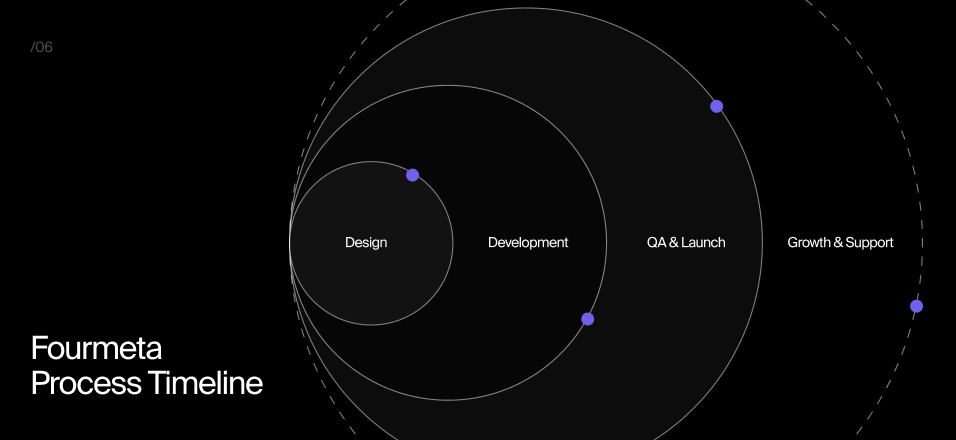
A well-run cross-platform mobile app development engagement should follow a structure that respects your time and produces a predictable output. Here's how we'd outline a solid process:
Discovery (1–2 weeks). Workshops to understand users, map out core journeys, and produce a prioritised feature set. This is where scope is defined and where a good agency will challenge your assumptions constructively.
Design (2–4 weeks). UX wireframes, interactive prototypes, and final UI. The goal is a tested, validated interface before a single line of production code is written.
Development (8–14 weeks). Sprints of two weeks with working software demonstrated at the end of each sprint. This is not a build-then-reveal process, you should be seeing, testing, and influencing the product throughout.
QA and launch (1–2 weeks). Thorough testing across device types, OS versions, and edge cases. App Store and Google Play submission, including handling review timelines.
Post-launch support. Monitoring, bug resolution, and planned iteration cycles. The product doesn't stop evolving at launch, it starts.
Frequently asked questions
How much does cross-platform mobile app development cost in the UK?
For a well-specified, production-ready app, UK market rates from a quality agency typically range from £40,000 to £150,000+ depending on complexity. Simple MVPs can come in lower; multi-integration, multi-role platforms will be higher. Be cautious of quotes significantly below this, they usually reflect significant compromises in quality, process, or the seniority of the people doing the work.
How long does it take to build a cross-platform app?
A credible timeline for a properly built cross-platform app is 14–20 weeks from a standing start. MVP-first approaches can reduce this to 10–12 weeks if scope is genuinely constrained.
Is Flutter or React Native better for my startup?
Both are strong choices in 2026. Flutter generally offers better visual consistency across platforms and increasingly strong web/desktop support. React Native benefits from JavaScript familiarity if your team already has web engineers. A good agency will recommend based on your specific situation, not on their own preferred stack.
Can I see the code? Who owns it?
Yes, and you. All code produced by Fourmeta becomes your property at project completion. We provide full handover of repositories, documentation, and deployment credentials.
What if I already have an existing app that needs rebuilding or migrating to cross-platform?
This is a common scenario and one we handle regularly. The discovery process for a migration project is different from a greenfield build, we audit the existing product, map the gaps, and recommend whether a phased migration or a clean rebuild makes more sense for your situation.
Choosing the right cross-platform app development partner
The market for mobile app development agencies in the UK is large and varied. The difference between the right choice and the wrong one isn't always obvious from a website or a first call.
What we'd recommend: talk to at least two or three cross-platform mobile app development companies before committing. Ask them about a project that went badly and how they handled it. Ask what they'd push back on in your brief. Ask who specifically will be working on your product.
If you're looking for a cross platform app development company that treats your product as seriously as you do, and that can bring design, development, and strategy under one roof, we'd welcome the conversation.
Fourmeta is an award-winning full-service digital agency based in London, UK. We build cross-platform mobile apps, digital products, and brand experiences for startups and established companies worldwide.
ruben-roubish
contact
Frequently asked questions
How much does cross-platform mobile app development cost in the UK?
For a well-specified, production-ready app, UK market rates from a quality agency typically range from £40,000 to £150,000+ depending on complexity. Simple MVPs can come in lower; multi-integration, multi-role platforms will be higher. Be cautious of quotes significantly below this, they usually reflect significant compromises in quality, process, or the seniority of the people doing the work.
How long does it take to build a cross-platform app?
A credible timeline for a properly built cross-platform app is 14–20 weeks from a standing start. MVP-first approaches can reduce this to 10–12 weeks if scope is genuinely constrained. A typical process runs discovery (1–2 weeks), design (2–4 weeks), development (8–14 weeks), then QA and launch (1–2 weeks).
Is Flutter or React Native better for my startup?
Both are strong choices in 2026. Flutter generally offers better visual consistency across platforms and increasingly strong web/desktop support. React Native benefits from JavaScript familiarity if your team already has web engineers. A good agency will recommend based on your specific situation, not on their own preferred stack.
Can I see the code? Who owns it?
Yes, and you. All code produced by Fourmeta becomes your property at project completion. We provide full handover of repositories, documentation, and deployment credentials. With any agency, make sure your contract clearly states that all source code, design assets and IP belong to you at project completion, because some agencies retain leverage through unclear IP clauses.
What if I already have an existing app that needs rebuilding or migrating to cross-platform?
This is a common scenario and one we handle regularly. The discovery process for a migration project is different from a greenfield build, we audit the existing product, map the gaps, and recommend whether a phased migration or a clean rebuild makes more sense for your situation.
Ruben Roubish is Chief Sales Officer at Fourmeta and the first person most clients talk to. He helps founders scope projects, set realistic budgets and timelines, and choose the right team and platform before any design or code begins.
Subscribe for insights, service updates, and a closer look at the world of Fourmeta®
Discover firsthand experiences from our clients about their journey with Fourmeta®Agency—insights into our collaboration, expertise, and results delivered.
Thank you for subscribe!
Oops! Something went wrong while submitting the form.




.avif)