You have a hypothesis. Maybe it's an AI-powered tool that automates something broken, or a smarter way to match supply with demand. Either way, the question isn't whether to build, it's whether to build it right the first time.
That's what AI MVP development is actually about. Not shipping the fastest possible thing, but shipping the most informative possible thing: a working product that either validates your core assumption or tells you it's wrong before you've spent a year finding out the hard way.
This guide covers what separates good AI MVP development services from bad ones, what to look for in a partner, and how real startups are getting this right.
What "AI MVP" actually means (and what it doesn't)
An AI MVP isn't a demo with a ChatGPT wrapper. It's a purpose-built, production-grade product with AI capabilities at its core, designed to test a specific value proposition with real users.
The distinction matters because the failure modes are different:
A standard MVP can fail because the feature set is wrong. An AI MVP can fail for all of those reasons plus model selection, data pipeline design, latency, hallucination handling, and cost-per-inference. The companies that do this well think about all of it upfront.
What a proper AI MVP should include:
A defined core AI capability (generation, classification, recommendation, extraction, or prediction)
Real user flows built around that capability
Infrastructure that can scale without a full rebuild
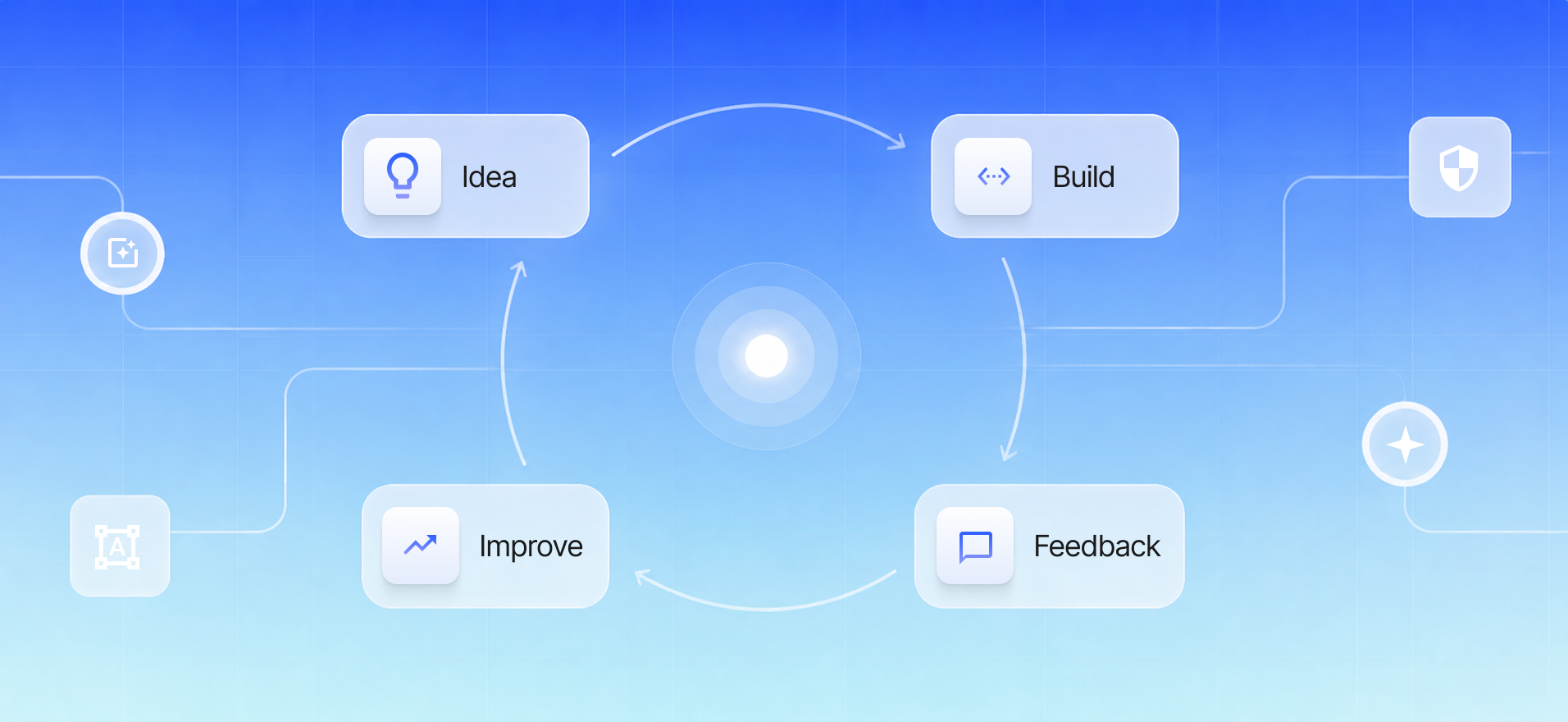
Feedback loops baked in from day one so the model improves with use
What it should not include: everything else. Scope is the biggest killer of MVPs. The AI component has to carry the proof-of-concept weight; everything else should be ruthlessly cut.
Why most AI MVPs fail and what the good ones get right
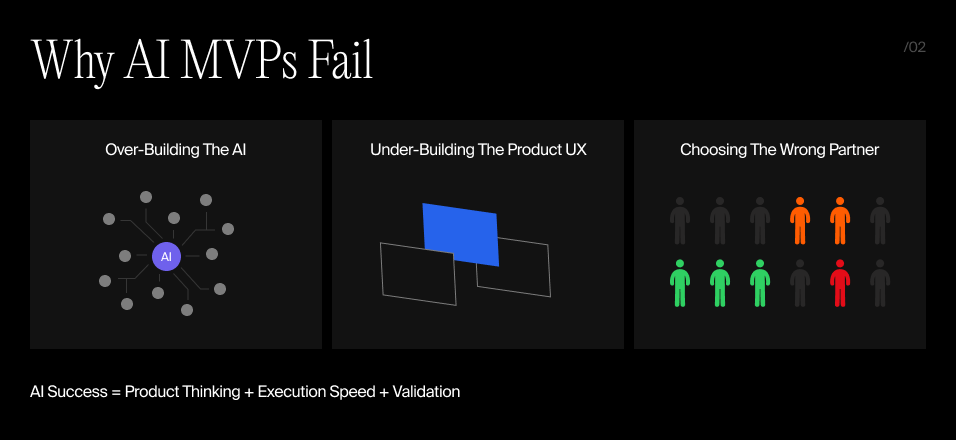
Most AI MVP development projects fail for one of three reasons:
They over-build the AI layer. Teams spend months on model fine-tuning before they've validated that users actually want the output. A good partner ships a good-enough model fast, collects real data, then improves.
They under-build the product layer. AI capability without UX is a prototype, not a product. If users can't intuitively extract value from your AI feature in the first session, they won't come back to try again.
They pick the wrong partner. Generalist dev agencies that add "AI" to their services page are not the same as teams that have shipped real AI products. The difference shows up in the questions they ask before writing a single line of code.
The teams that get AI MVPs right share a few habits: they validate the data assumption first, they design the AI experience before the AI model, and they treat the MVP as a learning vehicle rather than a finished product.
What to look for when evaluating AI MVP development services
When you're talking to potential partners, here's the filter that actually separates good from great:
AI-native experience
Ask to see shipped AI products, where AI is the core value proposition. Case studies should show model choices, integration patterns, and what happened after launch.
Product thinking
The best custom MVP development AI companies think like product managers. They'll push back on your feature list, ask about your monetisation model, and challenge assumptions about your users. If they just take the brief and quote it, walk away.
Speed with structure
A credible AI MVP partner should be able to take you from concept to a working product in 8-14 weeks. Longer than that for an MVP usually means they've over-scoped it. Shorter than that usually means they've cut corners on architecture that will cost you later.
Full-stack ownership
The most costly mistake startups make is splitting AI development from product design from engineering. When each discipline is managed by a different vendor, integration becomes the founder's problem. Look for teams that own strategy, design, AI, and engineering under one roof.
Post-launch support
AI products need tuning. A good partner doesn't disappear at handoff, they stay engaged through the first feedback cycle because the model is only as good as the real-world data it encounters.
The evaluation checklist before you sign
Before committing to an AI MVP development partner, run through these:
Can they explain how they'd approach your specific AI use case (not generically)?
Do they have experience with the relevant AI stack: LLMs, computer vision, recommendation systems, or whichever applies?
What's their typical time-to-first-working-build?
How do they handle model failure modes (hallucinations, edge cases, latency spikes)?
What does post-launch engagement look like?
Can they show a case study where the AI component was the central product feature, not an add-on?
If they answer all of these confidently and with specifics, that's a strong signal. Vague answers about "leveraging AI capabilities" are not.
Fourmeta: AI MVP development services built for startups
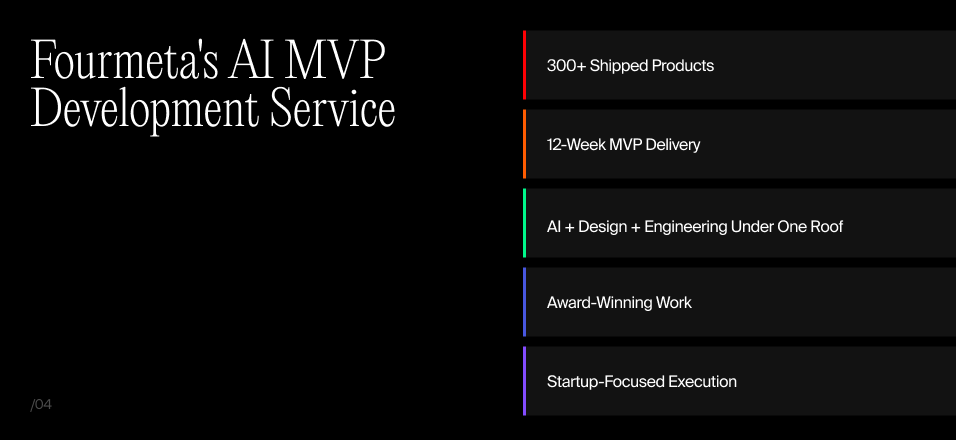
Fourmeta is a London-based, award-winning digital agency that has shipped 300+ products for startups and scale-ups. Their MVP development service is built around a single promise: a market-ready product in 12 weeks, with strategy, design, AI, and engineering handled by one team.
That last part, one team, is what makes their model work for early-stage founders. Rather than coordinating separate vendors for design and development, Fourmeta runs all disciplines in parallel. This eliminates the handoff lag that typically kills startup timelines and means the AI layer is designed into the product from day one, not integrated at the end.
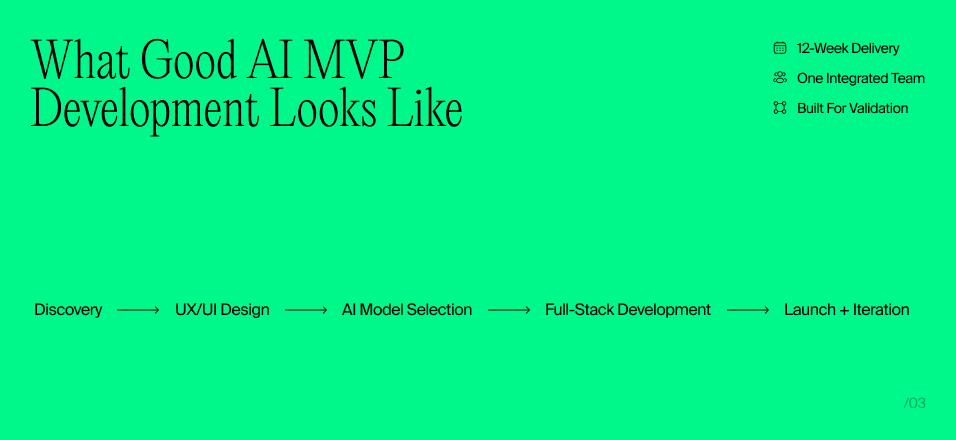
Their AI MVP development process covers the full stack: product discovery and scoping, UX and interface design, AI model selection and integration, backend engineering, and launch. Post-launch, the team stays engaged through the first iteration cycle, which is critical for AI products that need real-world feedback to improve.
With 10 industry recognitions and a portfolio spanning AI platforms, SaaS tools, and consumer products, Fourmeta sits squarely in the category of partners who have actually shipped what they're selling.
A real example: Fourmula.ai
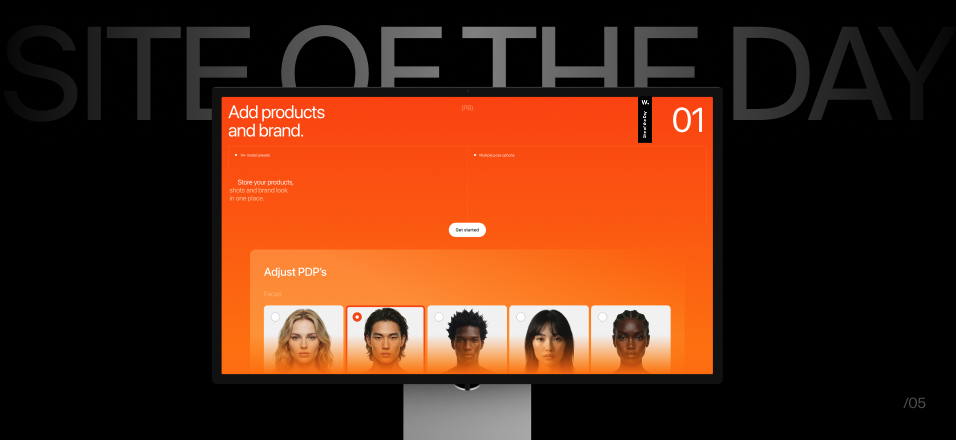
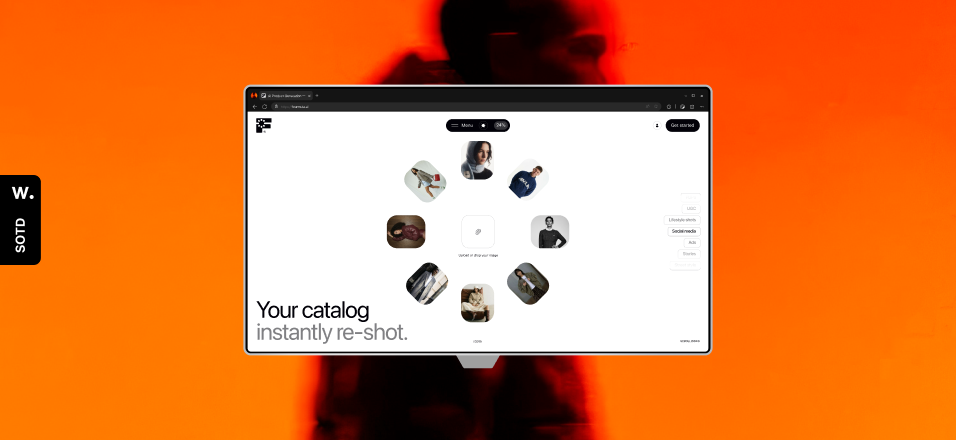
One of the clearest recent examples of AI MVP development done right is Fourmula.ai, built by Fourmeta.
The brief was to build an AI visual generation platform from the ground up: brand identity, UX, AI development, and a marketing site, all shipped together. The challenge most teams face in this scenario is that the pieces get built in sequence, like brand first, then design, then engineering, which adds weeks and creates integration friction.
Fourmeta ran the process in parallel. Brand, product design, and AI development happened simultaneously, which meant the UX was shaped by what the AI could actually deliver, and the AI model selection was informed by what the user experience required. The result was a coherent product, not a set of deliverables assembled at the end.
What makes it a useful reference is the process. The team treated the AI capability and the product experience as inseparable from the start, which is exactly the approach founders should demand from any AI MVP development services partner.
What the best companies for AI MVP development actually look like
The best companies for AI MVP development services aren't the biggest agencies or the cheapest freelancers. They sit in a specific middle ground: experienced enough to have shipped real AI products at speed, small enough to move fast and stay accountable.
A few things consistently define the best ones:
They've failed fast before. Teams that have shipped AI products have also dealt with models that didn't perform, data pipelines that broke, and user feedback that invalidated assumptions. That experience is worth more than a polished pitch deck.
They have a clear process for the ambiguous early phase. Custom MVP development with AI is hard to scope because the requirements are partially unknown until you start building. The best partners have a structured discovery process that de-risks the build by aligning on assumptions before writing code.
They talk about constraints, not just capabilities. Any competent team can tell you what AI can do. The ones worth hiring are specific about what it can't do reliably yet, what the edge cases are, and how they plan to handle them.
They've built for founders before, not just enterprises. Startup timelines, budgets, and risk tolerances are different. A partner that primarily works with large organisations will often over-engineer for compliance and under-optimise for speed.
The practical decision: in-house vs agency vs freelancers
If you're evaluating whether to hire in-house, use an agency, or cobble together freelancers:
In-house makes sense if AI is your core, long-term competitive moat and you can afford 6+ months to hire the right team. Most early-stage startups can't.
Freelancers can work for isolated tasks, like prompt engineering, data pipeline work, specific integrations. They rarely have the product judgment to own an MVP end-to-end.
Specialist agencies are the right choice for most startups at the MVP stage. You get a full team, an established process, and accountability for the outcome. The cost is higher per hour, but the total cost of getting it right the first time is almost always lower.
The caveat: only this applies to agencies that genuinely specialise in AI product development, not generalist web agencies that have recently added "AI" to their homepage.
The short version
Building an AI MVP is harder than building a standard MVP not because the technology is inaccessible, but because the failure modes are less obvious and the integration surface area is larger. The stakes of picking the wrong partner are higher.
What you're looking for is a team that has shipped AI products before, thinks in products rather than features, can move fast without sacrificing architecture, and treats your validation questions as seriously as you do.
If they can show you a real case study, something like Fourmeta's Fourmula.ai build, where the AI capability and the product experience were designed together, that's the proof point you need.
Start with your validation hypothesis. Find a partner who builds toward it. Ship fast, learn faster.
Subscribe for insights, service updates, and a closer look at the world of Fourmeta®
Discover firsthand experiences from our clients about their journey with Fourmeta®Agency—insights into our collaboration, expertise, and results delivered.
Thank you for subscribe!
Oops! Something went wrong while submitting the form.




.avif)

















.avif)


