


.avif)


Recognitions
projects
Services












Chatbot development services: costs, features & why enterprises can't afford to cut corners


If you run an enterprise or a serious e-commerce operation, the chatbot question isn't whether, it's how. And the answer to "how" matters far more than most CEOs realise when they first start evaluating options.
This article is written for enterprise leaders and e-commerce executives who've already moved past the curiosity stage and need a clear-eyed view of what custom AI chatbot development services actually involve, what they cost, and why building on your own infrastructure is increasingly non-negotiable.
The problem with the "just use an off-the-shelf tool" approach
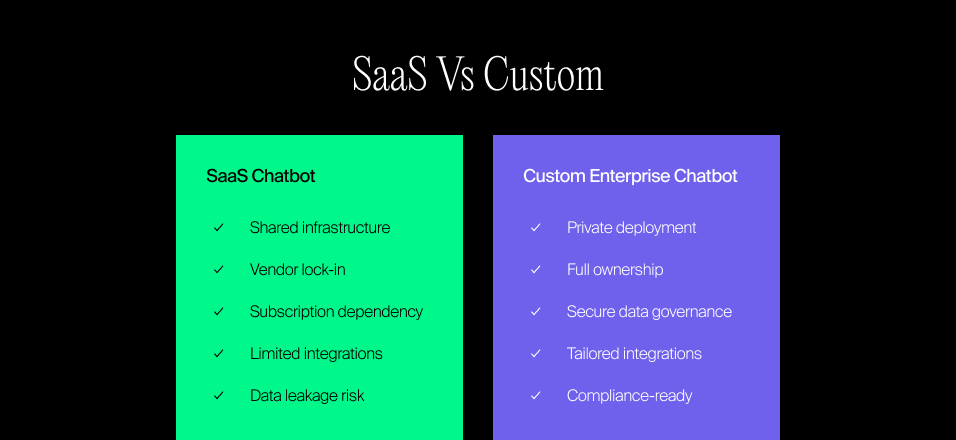
When your team first raises the chatbot conversation, someone in the room will inevitably suggest a ready-made solution. Intercom, Drift, Tidio, Zendesk bots, there's no shortage of them. They're quick to deploy, subscription-based, and can be live in a week.
For a five-person startup, that's a reasonable call. For an enterprise or a scaling e-commerce brand, it's a liability hiding behind a low monthly price tag.
Here's the core problem: when you use a SaaS chatbot platform, every conversation your customers have, every product query, every complaint, every support ticket, every purchase intent signal, flows through that vendor's infrastructure. Your customer data, your transaction patterns, your product catalogue interactions, your pricing sensitivities: all of it passes through servers you don't control, processed by models you don't own, potentially used to train systems you'll never see.
For enterprises operating under GDPR, HIPAA, PCI-DSS, or sector-specific data regulations, this is an active compliance exposure. For e-commerce businesses handling hundreds of thousands of customer interactions monthly, it's a competitive intelligence leak, you are, in effect, feeding your most valuable behavioural data into platforms shared with your competitors.
The answer is not to avoid AI chatbots. The answer is to build one that runs on your infrastructure, under your governance, with your data staying exactly where it belongs.
What custom AI chatbot development services actually deliver
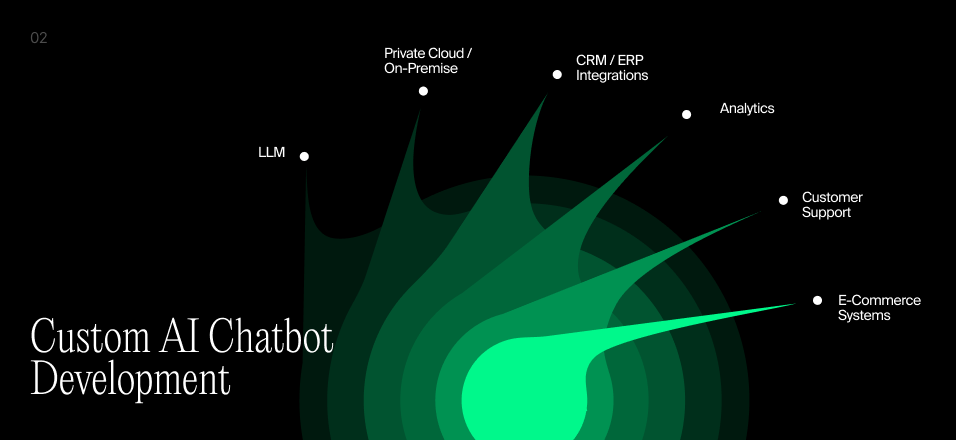
A serious AI chatbot development service is not a product. It's an engineered solution built around your specific environment, your data architecture, and your compliance requirements
For enterprises and e-commerce operators, that means:
On-premise or private cloud deployment. Your chatbot runs on your servers or your dedicated cloud environment. Conversation data never touches a third-party LLM provider's shared infrastructure. You control data residency, retention policies, and access permissions.
LLM integration with data isolation. Custom AI chatbot development services can connect to powerful language models (GPT-4, Claude, Llama, Gemini, and others) while keeping your data isolated. This is typically achieved through private API access, local model deployment, or fine-tuned models trained exclusively on your data with no data sharing back to the model provider. Your customer conversations do not become training data for anyone else's AI.
Deep system integration. Enterprise chatbots need to connect to ERP systems, CRM platforms, inventory management, order management systems, payment processors, and helpdesk tools. A custom build means those integrations are engineered for your specific stack, not limited to whatever a SaaS platform happens to support via a pre-built connector.
Conversational logic built for your business. Off-the-shelf tools give you templates. Custom AI chatbot development gives you a bot that understands your product catalogue, your pricing logic, your return policies, your escalation workflows, and your tone of voice. The difference in customer experience is not subtle.
Ownership. When you commission custom chatbot development services, you own the codebase, the model weights, the conversation data, and the intellectual property. There's no vendor lock-in, no price hike risk, no platform shutdown scenario that takes your customer engagement layer with it.
The data protection argument in full
Let's address this directly, because it's the argument that should settle the debate for any enterprise or e-commerce CEO.
Every time a customer interacts with a SaaS-hosted chatbot, the conversation is logged on that platform's servers. In many cases, those interactions are used directly or indirectly to improve the underlying models. You agreed to this in terms-of-service documents your legal team may or may not have fully reviewed.
What does that actually mean in practice?
For an e-commerce brand, it means your customer's purchase history, browsing behaviour, product questions, and complaint patterns are being processed on infrastructure shared with other businesses. The model serving your chatbot has likely been exposed to interaction data from your competitors on the same platform. The insights your customers are inadvertently generating are not exclusively yours.
For an enterprise in a regulated sector, like financial services, healthcare, legal, manufacturing, the implications are more serious. Data sovereignty requirements, client confidentiality obligations, and internal governance frameworks may already prohibit this kind of third-party data processing. A chatbot built on a shared SaaS platform may be out of compliance by design, regardless of how the vendor positions their security credentials.
Custom AI chatbot development services solve this at the architecture level. The chatbot is deployed within your environment. LLM inference can be run locally using open-weight models, or via private API agreements with providers that contractually commit to data non-retention. Your data governance policies apply uniformly. Your security team has full visibility. And when a regulator asks where customer conversation data is stored, the answer is simple: here, under our control, subject to our policies.
This is not a premium feature. For enterprises, it is a baseline requirement. The question is whether your chatbot vendor understands that or whether they're selling you convenience at the expense of control.
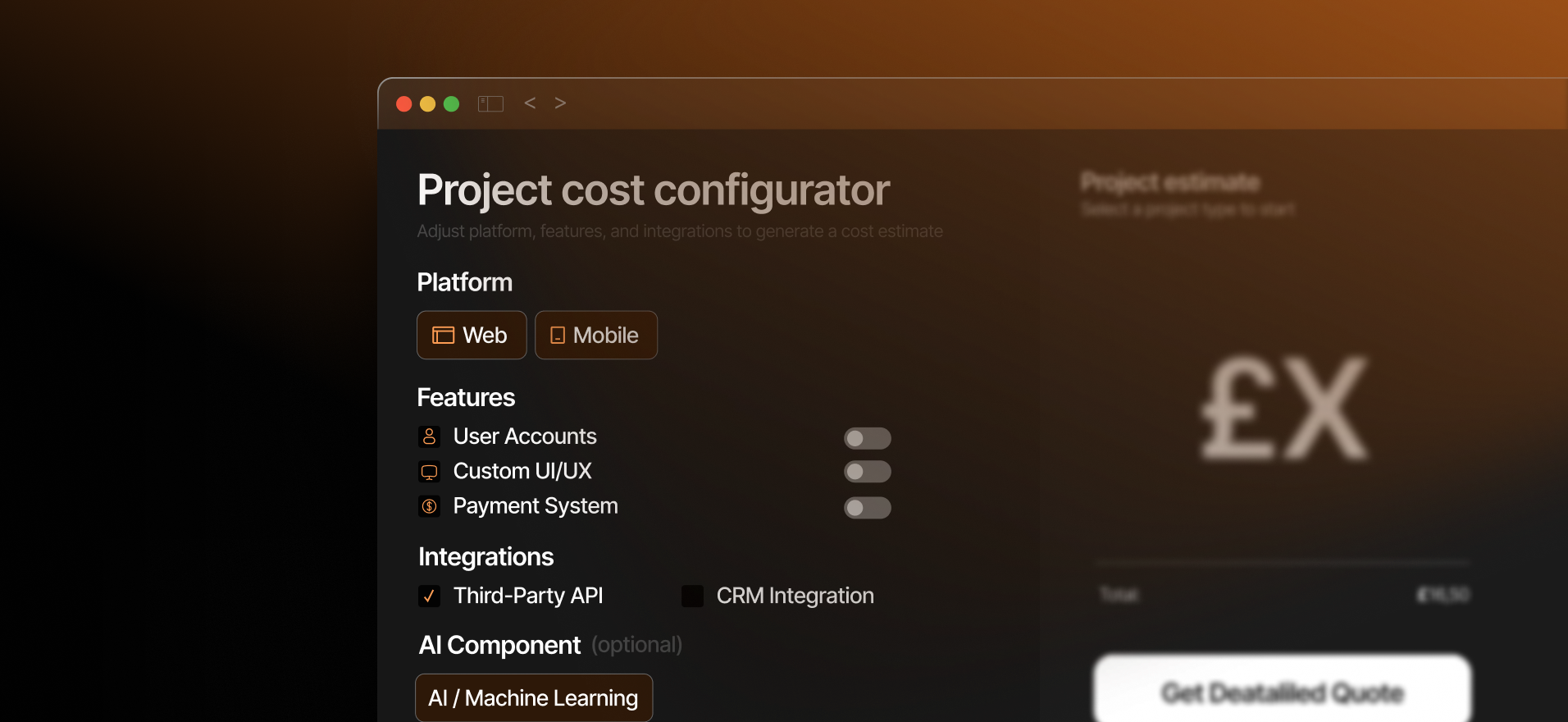
How much does enterprise chatbot development cost?

Cost varies significantly based on complexity, integration depth, and deployment model. Here's a realistic breakdown for enterprise and e-commerce contexts.
eCommerce: $5,000–$50,000
A well-engineered e-commerce AI chatbot at this tier handles product discovery and recommendation, order tracking, returns and exchanges, upsell and cross-sell identification, and customer segmentation, all connected to your existing Shopify, Magento, or custom platform. Private deployment with data isolation is included as standard. Expect 3–5 months from brief to go-live.
The ROI case at this level is straightforward: increased average order value through real-time upsell logic, reduced support headcount through automated query containment, and improved conversion rates through personalised product guidance. Most e-commerce operators at meaningful scale recover the build cost within two to three quarters.
Enterprise: $50,000–$100,000
Enterprise chatbot development at this tier involves complex multi-system integration (ERP, CRM, HRIS, legacy databases), multi-language and omnichannel deployment, rigorous security architecture (private cloud, on-premise, or hybrid), compliance framework alignment (GDPR, HIPAA, SOC 2, PCI-DSS), custom model fine-tuning on proprietary data, and dedicated post-launch support with SLA commitments. Projects of this scope typically run 6–18 months.
At this level, the business case is usually one of several: removing human bottlenecks from high-volume internal processes, automating complex customer journeys that currently require specialist agent involvement, or consolidating fragmented support infrastructure into a single intelligent layer.
What drives cost up
The biggest cost drivers in custom chatbot development are integration complexity (the more systems the bot must connect to, the higher the engineering overhead), compliance architecture (private deployment, audit logging, and regulatory alignment add significant design and testing requirements), model customisation (fine-tuning a model on proprietary data is expensive but yields meaningfully better performance), and post-launch commitments (ongoing support, model retraining, and performance monitoring are often underestimated in initial budgeting).
What drives cost down
Clear scope definition at the outset saves more money than any other single factor. Businesses that arrive at a vendor with well-documented use cases, defined integration requirements, and agreed success metrics spend less and get better results. Starting with one high-impact use case before expanding also reduces risk and initial outlay significantly.

Features that matter for enterprise and e-commerce deployments
Not all chatbot features are equally relevant to your context. For enterprise and e-commerce operators, these are the capabilities that move the needle:
Private LLM inference. The ability to run language model inference within your own infrastructure, or via a dedicated API agreement with contractual data non-retention. This is the technical foundation of data sovereignty.
Contextual understanding across long sessions. Enterprise customers and high-value shoppers do not ask single-turn questions. The bot must maintain context across extended conversations, recall earlier exchanges within a session, and adapt responses accordingly.
Deep catalogue and system awareness. For e-commerce, the bot should understand your full product catalogue, real-time inventory, pricing rules, and promotional logic, not a cached snapshot, but live data via API. For enterprise, the equivalent is live integration with your operational systems.
Intelligent escalation. The bot should recognise when a query exceeds its competence and hand it off to a human agent with full conversation context, relevant customer data, and a recommended next action. Escalations without context are a customer experience failure.
Role-based access and audit logging. Enterprise deployments require granular access control and comprehensive logging for compliance and security review purposes. Every interaction should be auditable.
Analytics tied to business metrics. Not just technical metrics, like containment rate, resolution accuracy, but commercial metrics: conversion influence, average order value impact, cost-per-resolution. The chatbot should be reportable in the same language as the rest of your business.
Fourmeta AI chatbot development service
When it comes to AI chatbot development services for enterprises and e-commerce businesses, Fourmeta stands out as a vendor that genuinely understands both the technical and commercial dimensions of the problem.
Fourmeta is a London-based, award-winning full-service digital agency with over 6 years in the industry, 300+ completed projects, and a dedicated team of 30+ developers specialising in AI development. Recognised as a Top eCommerce Developer on Clutch, most-reviewed Shopify company on The Manifest, and holding multiple Behance awards, they bring an unusual combination: deep AI engineering capability layered on top of serious e-commerce domain expertise.

Their approach to data sovereignty is grounded in engineering, not just positioning. Fourmeta's AI team works across the full LLM stack: GPT-4, Claude, Gemini, Llama 3, Amazon Bedrock, Grok, and others, and selects the deployment architecture based on the client's data governance requirements. For clients who need full data isolation, they architect accordingly. That model-agnostic, compliance-first approach is exactly what enterprise and e-commerce operators should be demanding from any AI chatbot development company.
Completed projects on chatbot development
Their e-commerce chatbot expertise runs deep. Fourmeta built Askflow, an AI-powered product recommendation engine for Shopify that generates personalised guidance based on live store data, creates custom AI models trained on individual product catalogues, and automates customer segmentation based on real shopping behaviour. They also developed a product recommendation AI chatbot that identifies upsell and cross-sell opportunities in real time with measurable impact on average order value. These are not demo features. They are production-grade capabilities that e-commerce CEOs should be evaluating against their own P&L.

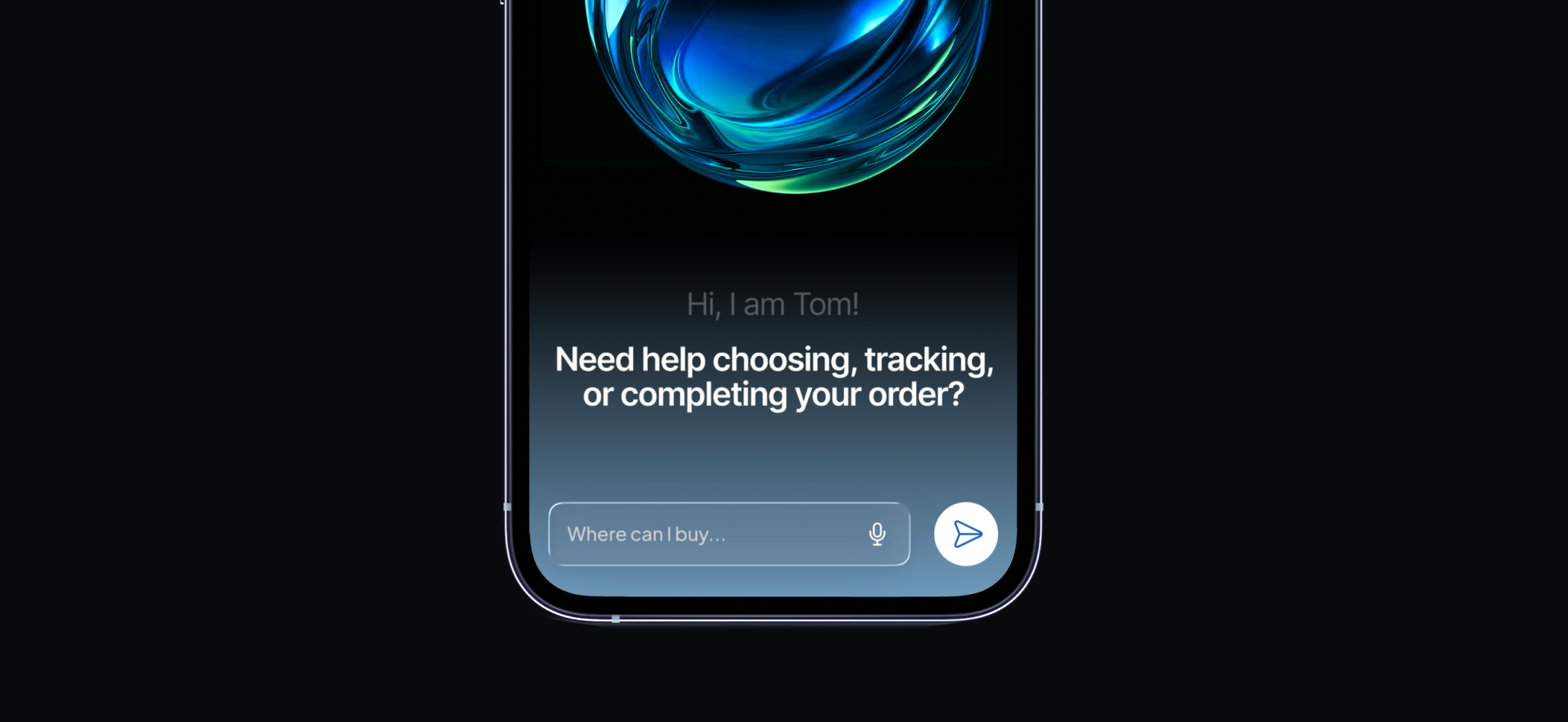
Two standout examples from their client portfolio illustrate the full scope of their AI chatbot development services. The Mixam AI chatbot is a custom conversational interface built for a print-on-demand platform, integrating AI-driven UX with full brand identity and deep platform connectivity.

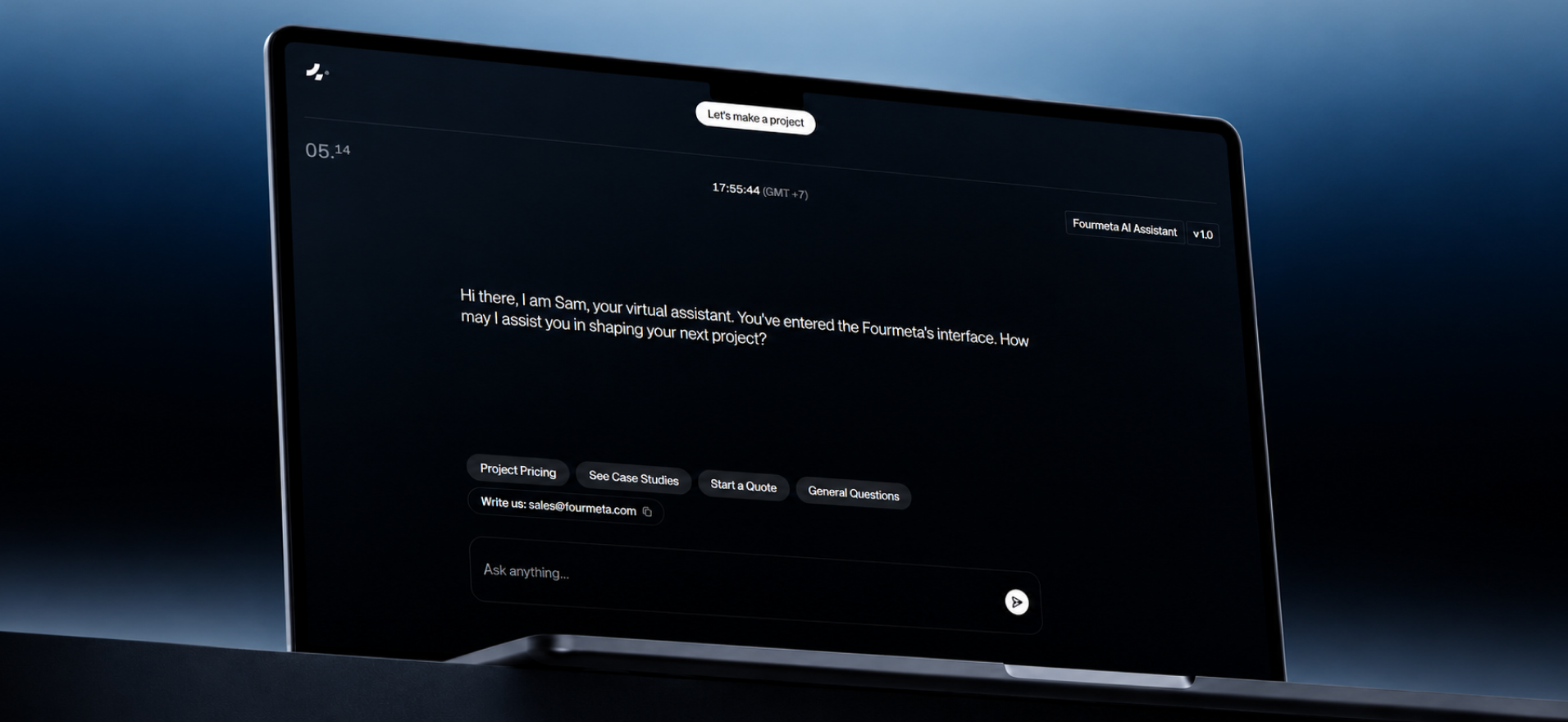
And the Fourmeta AI Assistant, own purpose-built assistant, handles project discovery, qualification, and site guidance in production, serving as a live demonstration of what their development services are capable of delivering.

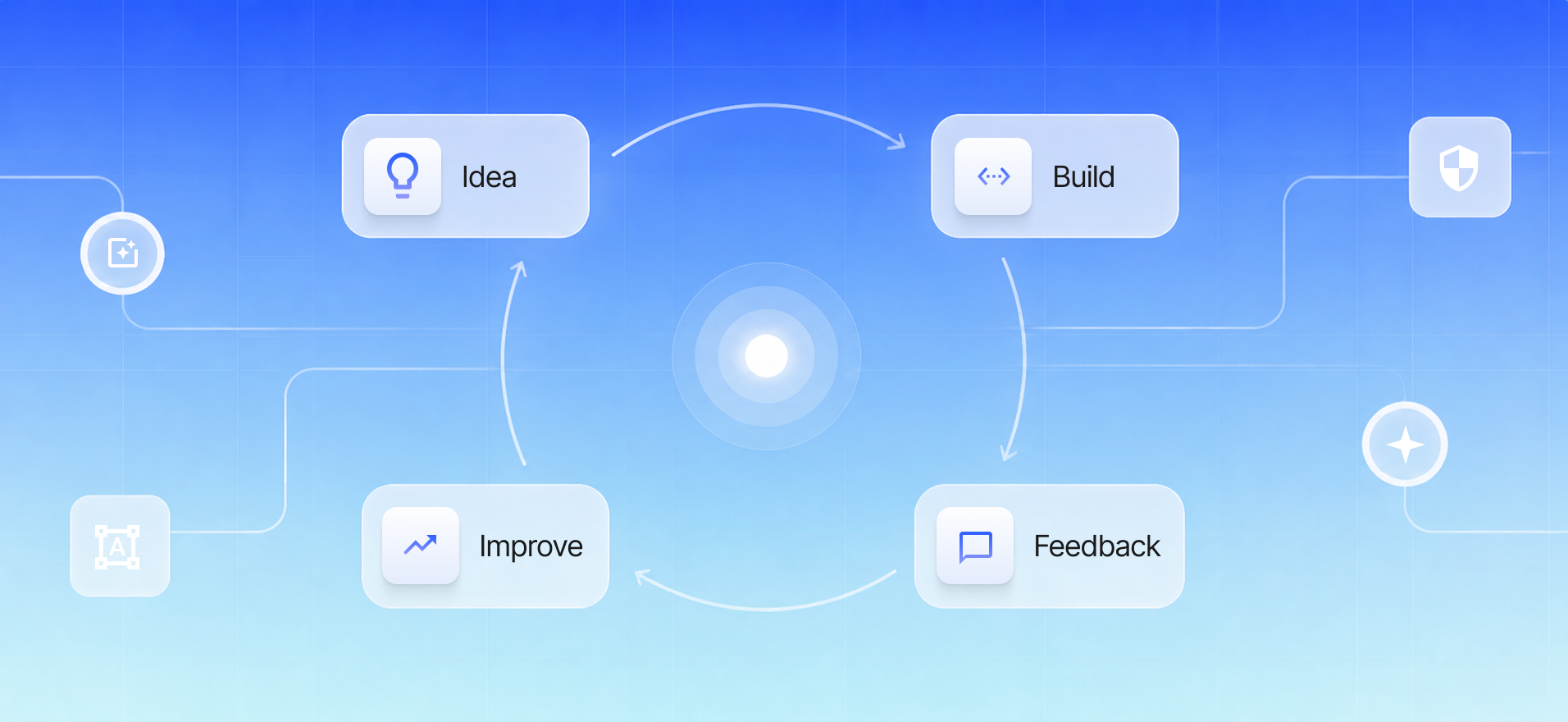
Their development process follows a structured five-stage flow: discovery, design, development, implementation, and support. That structure matters for enterprise clients because it means clear milestones, defined handoffs, and no ambiguity about what's being built or when.
For enterprise and e-commerce leaders who are serious about data protection, commercial performance, and building a chatbot that functions as a genuine business asset rather than a bolted-on tool, Fourmeta is the agency to engage first.
The executive decision framework
Before you engage any vendor or sign any scope of work, get clear on these four questions.
Where will your data live?
Insist on a specific answer, not "we take security seriously" but a precise description of the deployment architecture, data residency, and what contractual commitments the vendor will make around data non-retention.
What does the chatbot need to connect to?
Map every system the bot will need to access: CRM, ERP, OMS, helpdesk, product catalogue, payment systems. The integration list drives cost and timeline more than almost any other factor.
What does success look like in numbers?
Define your KPIs before you brief anyone. For e-commerce: conversion influence, AOV impact, support containment rate. For enterprise: process automation rate, cost-per-resolution, CSAT. Vendors who can't align their delivery to your KPIs will underdeliver.
Who owns the system after go-live?
Clarify IP ownership, model weights, codebase, and ongoing support obligations contractually before work begins. The post-launch model is where many engagements fall apart.
Final thought
The chatbot market is full of tools that are fast to deploy and comfortable to demo. For an enterprise or a high-volume e-commerce operation, comfort in a demo is not a useful signal. What matters is how the system performs in production, under real load, with real customer data, six months after go-live.
That outcome is determined almost entirely by two decisions: the architecture you build on, specifically whether your data stays under your control, and the AI chatbot development company you choose to build it.
Both decisions deserve more rigour than most organisations give them.
Ready to scope your chatbot project? Start by defining your data governance requirements and your top three use cases. That brief will tell you immediately whether a vendor is thinking seriously about your business or just trying to close a deal.




.avif)


